
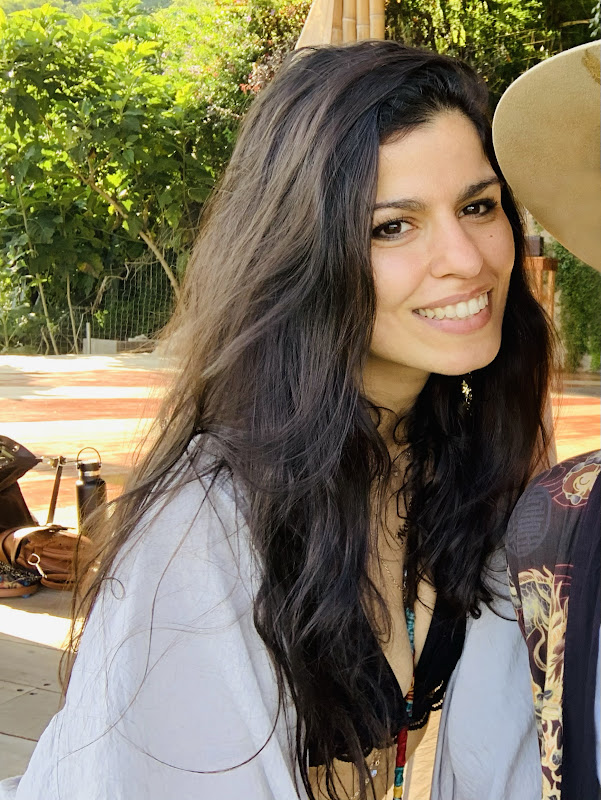
Nour Tohme
TAROT
Based in Los Angeles
Multi-disciplinary artist and experiential designer working at the intersection of feminine wisdom, ecological storytelling, and regenerative mysticism.
About Me
Nour is a multi-disciplinary artist & experiential designer. Her art focuses on feminine wisdom, ecological storytelling & regenerative mysticism. Through her practice of Archetypal Tarot and Middle Eastern divination arts, weaving mythology and animism, she seeks to offer soft spaces of inner exploration, enchantment and beauty.
Sessions
Tarot Reading - 30 minutes
Tarot Reading - 30 minutes - $50 (30 mins). Live video tarot reading.
$50
Tarot Reading - 60 minutes
Tarot Reading - 60 minutes - $100 (60 mins). Live video tarot reading.
$100
Q&A with Nour Tohme
1. Tell us a bit about you and your practice.
I am an archetypal tarot reader, visual artist, and scholar and lifelong student of mythology, archetypal wisdom and the feminine mysteries.
My practice is rooted in the belief that the tarot is far more than a divination tool, it is a sophisticated psycho-spiritual tool of wisdom and inquiry. I work with the tarot as a symbolic system of self-transformation, and a portal to wonder, magic and possibility.
Drawing from Jungian psychology, myth, archetypal wisdom and depth psychology, I work with the cards as mirrors of the psyche. The tarot allows us to access the unconscious, connect with our intuition, and explore the archetypal patterns that shape our lives.
My readings are gentle, reflective spaces where people can gain clarity, make contact with their inner worlds, and deepen their understanding of themselves. Rather than predicting the future, I help people uncover the deeper story unfolding beneath the surface of their experiences, come into relationship with the many parts of themselves, so they can move forward with greater awareness, agency, and a deeper sense of integration and wholeness.
2. What moment or realization made astrology and/or tarot “click” for you in a real, lived way?
The moment the tarot truly clicked for me was when I first read the book “The Jungian Tarot and its Archetypal Imagery” and discovered the profound mythic depth and intricate symbolism contained within each card. As a visual artist and art history researcher, I was mesmerized by the beauty of the cards and fascinated by the elaborate stories they told. For years, I fell into a rabbit hole of study, delving deep into the mysteries of the tarot, mythology, archetypal wisdom, and feminine mysticism.
I was also fascinated to learn about the connections between the tarot and older symbolic traditions from the Middle East. As someone from Lebanon with a deep curiosity about the oracular and mystical practices of my lineage, discovering these connections made the tarot feel even more meaningful and alive for me. It felt less like learning a new practice and more like remembering another thread in a much older tapestry of wisdom and inquiry.
3. What’s something most people misunderstand about astrology and/or tarot that you’re always gently correcting?
One of the biggest misconceptions is that the tarot is primarily about predicting the future. While some readers work with the cards in that way, I see the tarot as a symbolic language that helps us understand the present moment more deeply. It can illuminate patterns, tendencies, possibilities, and unconscious dynamics, but it does not remove our agency. We are always active participants in our lives.
Another common misunderstanding is that tarot is only for highly "spiritual" people. In my experience, the tarot can be approached in many ways. It can certainly be a spiritual practice, but it can also be a powerful tool for self-reflection, psychological inquiry, and creative exploration. Some of the people who connect most deeply with the tarot are artists, therapists, thinkers, and people who simply have a curiosity about themselves and the human experience.
I often remind people that the purpose of the tarot is not necessarily to tell us what will happen, but to help us develop a deeper relationship with ourselves. The cards invite us into conversation with our intuition, our inner patterns, and the parts of ourselves that may be asking for our attention. The more conscious we become, the more freedom we have in how we respond to life's circumstances.
4. What’s a recurring life theme you see in your readings right now (love, career pivots, endings, rebirth, boundaries), and how do you help people work with it instead of resisting it?
The theme I see most often right now is grief, and the attempt to make meaning in a world that increasingly doesn't make sense. Many people come to readings carrying some form of grief. Sometimes it’s the loss of a relationship, a job, a dream, or a version of themselves they once identified with. Other times, it is more collective and difficult to name: grief for the state of the world, for uncertainty about the future, for the pace of modern life, or for a feeling of disconnection from community and nature.
Beneath many of the questions people bring, whether about love, career, purpose, or identity, there is often a deeper longing to understand how to live in relationship with uncertainty and change. Rather than helping people bypass grief or rush towards answers, I encourage them to become curious about what their grief is asking of them. Grief is not simply something to overcome, it is often an expression of love. It can be a threshold that invites us into a more authentic relationship with ourselves and the world around us, and ultimately, into a deeper sense of belonging.
The tarot is particularly powerful in this regard because it offers symbolic containers for experiences that can be difficult to articulate. Through archetypes, images, and stories, the cards remind us that loss, transformation, uncertainty, and rebirth are all part of the human journey. They help us locate our personal experiences within a larger mythic and psychological landscape.
Ultimately, my role is not to provide certainty, but to help people find their own meaning. When we can make meaning of our experiences, even the most difficult ones, we are often able to meet life with greater resilience, compassion, and trust.
5. When someone comes to you feeling stuck, what part of the chart do you look at first and why? If you do tarot or another practice, tell us about your process for this.
I begin by exploring the symbolic landscape of the situation. I orient towards the portals and invitations in the situation, rather than rushing to find solutions. I guide the querent towards living the questions, rather than finding the answers. I look for the archetypes that are alive and present. What parts of the psyche are asking for attention? What energies are trying to emerge? What lessons or invitations are being offered? How might we soften and get comfortable here, in the unknown? How can uncertainty and mystery be a doorway?
Often, feeling stuck isn't actually about a lack of direction, it's about being caught between an old habitual pattern and a new possibility that feels scary and unknown. The cards can help illuminate where energy is blocked, where fear may be constricting our imagination and possibility, and what deeper truth is waiting to be acknowledged. My goal is never to tell someone what to do, but to help them hear the wisdom that is already present within them.
6. When someone is trying to understand their love life more deeply, where do you guide them to look first? What parts of the chart, energy, or inner patterns tend to reveal the most?
I often guide people away from focusing exclusively on the other person and back toward their relationship with themselves. Often, readings about love reveal deeper threads within our own psyche that are asking to be acknowledged and integrated, so that we may experience greater intimacy, authenticity, and connection in our relationships.
The most revealing questions are often: What am I longing for? What patterns keep repeating? What am I unconsciously seeking through love? Am I abandoning parts of myself in my relationships? Am I living in alignment with my own heart and spirit? Am I being true to my heart? How might I love deeper, more honestly, more completely?
In the tarot, certain archetypes emerge again and again in matters of love. Each reveals something about intimacy, attachment, desire, boundaries, self-worth, or authenticity. Love becomes much clearer when we understand the inner dynamics shaping our relationships.
7. When someone is trying to understand their career life or work/ purpose more deeply, where do you guide them to look first? What parts of the chart, energy, or inner patterns tend to reveal the most?
I look for the intersection between meaning, gifts, and vitality. Many people approach purpose as a singular goal or destination. I see it more as a living relationship with an intelligence of its own, as a practice of surrender to what naturally wants to come through us. The question becomes: What wants to be expressed through you?
The tarot often reveals hidden gifts, unlived creative potential, or values that have been neglected in pursuit of external success. Rather than focusing only on achievement, I help people explore what brings them alive, what feels meaningful, and what contribution they feel called to make. Purpose tends to emerge when we align with our authentic nature rather than trying to force ourselves into a predefined role.
8. What’s one small but meaningful practice or reflection you’d recommend people try based on their natal chart or reading?
After each reading, I send people short “mantras” and reflections of the most notable cards they received in their reading. I often encourage people to continue the conversation after the reading is over. Choose one card, one archetype, or one theme that emerged most strongly and spend a week in relationship with it. Journal about it. Notice where it appears in your life. Pay attention to dreams, synchronicities, emotions, and recurring situations. Ask yourself: How is this archetype already living within me? How is the archetype longing to collaborate with me? What wisdom, clarity, or invitation might it be offering?
The deepest insights often emerge not during the reading itself, but in the days and weeks that follow, as we begin to live in relationship with the symbols, archetypes, and patterns that were revealed during the reading.
9. What are your favorite decks + resources that you think people should know about?
My favorite decks are: the Golden Art Nouveau Tarot, the Morgan-Greer Tarot Deck, and the Ethereal Visions Tarot.
My favorite books about the tarot are: The Jungian Tarot and its Archetypal Imagery by Robert Wang, Seventy-Eight Degrees of Wisdom by Rachel Pollack, Tarot by the Library of Esoterica, The Way of Tarot: The Spiritual Teacher in the Cards by Alejandro Jodorowsky and Marianne Costa.
Some courses I loved: Rewilding the Tarot by Lindsay Mack, Archetypal Tarot School by Mariana Louis.
And a podcast I love: Tarot for the Wild Soul by Lindsay Mack.
Offerings
- TAROT